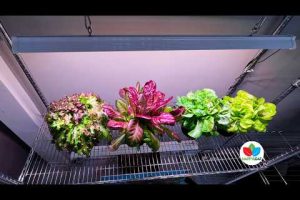
Indoor gardening has transformed dramatically over the past decade, and at the heart of that transformation sits one technology that almost every serious grower relies on: full spectrum LED grow lights. Whether you are nurturing delicate seedlings on a kitchen windowsill or managing a commercial vertical farm, the light you provide to your plants is arguably the single most important factor in determining growth quality, yield, and overall plant health. But what exactly makes full spectrum LED lighting so effective, and how do you choose the right one for your setup? This guide dives deep into everything you need to know — from the science behind light spectra to practical purchasing advice and expert-level optimization strategies.
What Are Full Spectrum LED Grow Lights?
Full spectrum LED grow lights are artificial lighting systems engineered to replicate the natural light spectrum of the sun. Unlike traditional grow lights that emit light in narrow, isolated wavelength bands, full spectrum LEDs deliver a continuous blend of ultraviolet (UV), visible, and infrared (IR) light across the entire photosynthetically active radiation (PAR) range — roughly spanning from 380 nanometers to 780 nanometers. This broad emission profile covers the blue, green, yellow, and red wavelengths that plants depend on for photosynthesis, flowering, and vegetative development.
The term “full spectrum” is sometimes used loosely by manufacturers, which can create confusion. A truly full spectrum LED panel does not simply combine red and blue diodes and call it a day. It incorporates white LEDs alongside targeted supplemental wavelengths, producing a balanced, natural-looking light that closely mirrors outdoor sunlight throughout different times of the day and seasons.

Why Full Spectrum LED Lights Mimic Natural Sunlight
Plants evolved over millions of years under the sun, and their physiological processes — from chlorophyll absorption to phototropism — are finely tuned to respond to the full breadth of solar radiation. When you provide a complete light spectrum, you are giving plants the exact signals they need for every stage of their life cycle.
Here is why that matters so much:
- Blue light (around 400–500 nm) promotes vegetative growth, chlorophyll production, and compact, sturdy stem development. It regulates stomatal opening and influences leaf expansion.
- Red light (around 600–700 nm) drives photosynthesis efficiency and triggers flowering and fruiting responses through phytochrome interaction.
- Far-red light (700–780 nm) influences shade avoidance responses, stem elongation, and the transition between vegetative and reproductive phases.
- UV light (380–400 nm) stimulates the production of protective compounds like flavonoids and anthocyanins, which enhance flavor, aroma, and pest resistance.
By combining all of these wavelengths into a single light source, full spectrum LEDs create an environment where plants can grow exactly as they would outdoors — just with greater control and consistency.
Key Benefits of Using Full Spectrum LED Grow Lights
Energy Efficiency and Lower Electricity Costs
One of the most significant advantages of full spectrum LED technology is its energy efficiency. Modern LED diodes convert roughly 50–60% of electrical energy into usable photosynthetic light, compared to only 20–30% for older HID (high-intensity discharge) systems. Over months of continuous operation, this difference translates into substantially lower electricity bills. For indoor growers running lights 12–18 hours per day, the savings are remarkable.
Reduced Heat Output
Traditional HPS and metal halide bulbs radiate enormous amounts of heat, often requiring expensive ventilation systems to prevent plant stress or leaf burn. Full spectrum LED panels produce minimal heat at the surface, allowing you to hang lights closer to the canopy without risking thermal damage. This also means lower cooling costs and greater flexibility in grow space design.
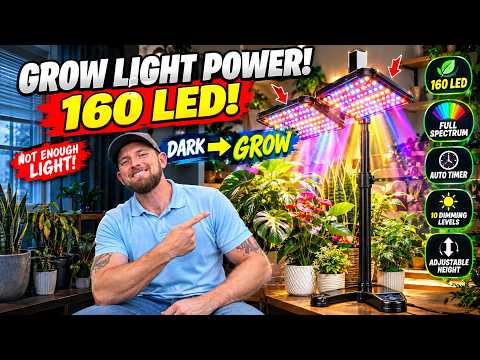
Year-Round Growing Capability
Because full spectrum LEDs provide consistent, controllable light independent of outdoor conditions, you can grow virtually any plant year-round. Seedlings, herbs, leafy greens, fruiting vegetables, and even tropical flowering plants thrive under carefully calibrated LED arrays regardless of the season or geographic location.
Longer Lifespan and Durability
Quality full spectrum LED fixtures are rated for 50,000 to 100,000 hours of continuous operation. That is roughly 10–15 years of typical grow-light use before any meaningful degradation in light output occurs. Compared to the 10,000–20,000-hour lifespan of fluorescent tubes or the 10,000–15,000-hour lifespan of HPS bulbs, LEDs represent a long-term investment that pays for itself many times over.
How to Choose the Right Full Spectrum LED Grow Light
Selecting the best full spectrum LED grow light for your setup involves understanding a few critical specifications. Do not let marketing jargon overwhelm you — focus on these measurable factors:
- Wattage and Coverage Area — Match the light’s wattage to the square footage of your growing space. A common guideline is 30–50 watts of actual power draw per square foot for flowering plants and 15–25 watts for leafy greens or seedlings.
- PPFD and DLI Values — Photosynthetic Photon Flux Density tells you how much light actually reaches the plant canopy. Look for lights that provide detailed PPFD maps rather than vague claims about brightness.
- Dimming and Spectrum Controls — Advanced fixtures allow you to adjust the ratio of blue to red light, which is invaluable during different growth phases. Some even let you shift the spectrum independently for veg and bloom stages.
- Driver Quality and Warranty — A reliable meanwell driver or equivalent ensures stable current delivery and protects your investment. Look for warranties of at least three to five years.
- Form Factor and Heat Dissipation — Aluminum housing with passive heatsink design is standard. Check that the fixture includes adequate ventilation channels or mounting flexibility for your tent or room layout.
Full Spectrum vs. Other Grow Light Spectrums
Understanding how full spectrum stacks up against other lighting options helps clarify why it has become the gold standard for indoor cultivation.

| Light Type | Spectrum Range | Best For | Energy Efficiency | Heat Output |
| Full Spectrum LED | 380–780 nm (complete) | All growth stages, all plant types | High (50–60% PAR efficiency) | Low |
| Red/Blue LED (Pink/Purple) | 630–660 nm + 430–470 nm | Vegetative and flowering only | Moderate | Low |
| T5 Fluorescent | Broad but weak in red/blue peaks | Seedlings, clones, herbs | Moderate | Moderate |
| HPS (High Pressure Sodium) | Heavy in yellow/orange/red | Flowering and fruiting | Low (20–30% PAR efficiency) | High |
| Metal Halide (MH) | Heavy in blue/white | Vegetative growth | Low | Very High |
The comparison table above makes it clear: full spectrum LED grow lights offer the most balanced, efficient, and versatile lighting solution for growers at every level. While red/blue LED arrays work well for targeted supplementation, they lack the balanced light quality that promotes healthy, natural plant development across all stages.
Best Practices for Using Full Spectrum LED Grow Lights
Even the best full spectrum LED fixture will underperform if it is not used correctly. Here are expert-level practices that make a measurable difference:
- Maintain proper hanging height. Keep LED panels 18–30 inches above the canopy during the vegetative stage and 12–24 inches during flowering. Full spectrum LEDs run cool enough to allow closer positioning, but start higher and monitor plant response.
- Follow a consistent light schedule. Most plants thrive on 16–18 hours of light during vegetation and 12 hours of uninterrupted darkness during flowering. Avoid disrupting the dark period, as plants use this time for critical metabolic processes.
- Use reflective surfaces. Mylar, white paint, or reflective ducting on grow room walls increases effective light penetration by 20–30%, ensuring every leaf receives adequate photosynthetic energy.
- Monitor and adjust. Use a PAR meter or smartphone app with a quantum sensor to verify that your PPFD levels match the needs of your specific crop. Lettuce needs far less light than cannabis or tomatoes, for example.
- Rotate your plants regularly. Even with excellent light distribution, slight variations across the coverage area mean that rotating pots every few days promotes even growth and prevents leggy stretching.
Advanced Tips for Maximizing Yield with Full Spectrum LEDs
Leverage Light Recipe Customization
Some premium full spectrum LED fixtures now include programmable spectrum controls that let you fine-tune the ratio of blue to red to far-red light. During the vegetative phase, increasing the blue ratio promotes bushy, compact growth with dense foliage. Switching to a higher red ratio during the bloom phase encourages elongated stems, larger flowers, and heavier fruit production. Far-red supplementation in the final weeks of flowering can trigger the shade-avoidance response, increasing inter-nodal spacing and improving light penetration into the lower canopy — a technique known as spectrum tuning for canopy management.
Implement Light Intensity Gradients
Rather than running every light at full power, consider creating a light intensity gradient across your growing area. Stronger light at the center, softer light at the edges, and dimmer conditions for shade-tolerant understory plants mimics the natural forest canopy environment where different species coexist. This approach maximizes usable growing space and allows you to cultivate a wider variety of plants simultaneously.
Frequently Asked Questions
1. Can full spectrum LED grow lights replace natural sunlight completely?
Yes, high-quality full spectrum LED grow lights can fully replace sunlight for indoor cultivation. As long as the fixture delivers sufficient PPFD levels and provides the correct photoperiod for your specific plant species, plants will grow, flower, and produce just as effectively — often more so — under optimized LED conditions.
2. How far should full spectrum LED grow lights be from seedlings?
For seedlings and young clones, maintain a distance of 24–36 inches above the canopy. Seedlings are particularly sensitive to light intensity and can experience photobleaching or stress if the light is too close. As the plants mature and develop more leaves, you can gradually reduce the hanging height.
3. Do full spectrum LED grow lights produce UV light that is harmful to humans?
Most commercial full spectrum LED grow lights include only trace amounts of UV-A and UV-B wavelengths — typically less than 1–2% of total output. These levels are well within safe ranges for human exposure and are actually beneficial for plants. However, it is still advisable to avoid staring directly at the light and to use protective eyewear if you are working under intense fixtures for extended periods.
4. What is the difference between full spectrum LED and white LED grow lights?
White LED grow lights are a subset of full spectrum technology. While white LEDs combine red, green, and blue phosphors to produce a balanced white output, true full spectrum LEDs go further by incorporating additional UV and far-red diodes. This extra range provides a more complete photobiological spectrum that activates a wider array of plant photoreceptors beyond just chlorophyll absorption.
5. Can I use full spectrum LED grow lights for aquaponics or hydroponics systems?
Absolutely. Full spectrum LEDs are highly compatible with both hydroponic and aquaponic growing methods. The low heat output and precise spectrum control make them ideal for enclosed growing environments where temperature and humidity must be carefully managed. Many commercial aquaponic operations now rely exclusively on full spectrum LED arrays for their entire lighting needs.
Conclusion
Full spectrum LED grow lights represent the most advanced, efficient, and versatile lighting solution available for indoor growers today. From their ability to replicate the complete solar spectrum to their exceptional energy savings, low heat output, and decade-long operational lifespan, these fixtures have fundamentally changed what it means to garden indoors. Whether you are a beginner setting up your first herb garden on a balcony or a commercial cultivator managing thousands of square feet of growing space, investing in quality full spectrum LED technology is one of the single best decisions you can make. Focus on matching light specifications to your specific crops, follow proven practices for positioning and scheduling, and you will be rewarded with healthier plants, bigger harvests, and a more sustainable growing operation for years to come.