


When the sun dips below the horizon and your backyard transforms into a dark, unwelcoming space, nothing beats the convenience of outdoor solar lights that activate automatically and illuminate your landscape without touching a single electrical wire. The best outdoor solar lights have evolved dramatically in recent years, shedding their old reputation as dim, unreliable alternatives to hardwired fixtures. Today’s leading solar-powered outdoor lights deliver impressive brightness, extended runtime, and sophisticated designs that complement any garden, pathway, or patio. Whether you are a first-time buyer exploring solar landscape lighting or a seasoned homeowner upgrading to commercial-grade solar flood lights, this comprehensive guide covers everything you need to know to make the smartest purchase decision.
Why Outdoor Solar Lights Are Worth Your Investment
Solar-powered outdoor lighting eliminates the need for expensive electrical installations, reduces your monthly utility bills, and operates entirely off-grid. Unlike traditional landscape lighting that requires buried cables or extension cords, solar garden lights harvest free energy from the sun during the day and store it in built-in rechargeable batteries. The result is a zero-cost lighting solution that requires minimal maintenance and typically lasts between five and ten years depending on the quality of components.
Beyond cost savings, solar outdoor lights offer unmatched installation flexibility. You can place them anywhere that receives adequate sunlight, reposition them seasonally, or scale your lighting system without hiring an electrician. For homeowners focused on sustainability, solar pathway lights and solar wall lights represent one of the easiest ways to reduce your household energy footprint while enhancing curb appeal and property security.
Types of Outdoor Solar Lights for Every Need
The outdoor solar lighting market includes several distinct categories, each designed for specific applications. Understanding these types helps you match the right fixture to your space and requirements.
1. Solar Pathway Lights
Solar pathway lights are the most popular category of solar outdoor lighting. These low-profile fixtures line walkways, garden borders, and driveways, providing gentle guidance and ambient illumination. Modern solar path lights use LED technology and come in styles ranging from minimalist brushed steel to rustic lantern designs. Most models include built-in motion sensors or stay lit throughout the night after charging for six to eight hours under direct sunlight.
2. Solar Flood Lights and Security Lights
Solar flood lights deliver high-lumen illumination for security and safety purposes. These powerful units feature wide beam angles, adjustable mounts, and durable weather-resistant housings. Premium solar security lights include PIR motion sensors that trigger bright light when movement is detected within a range of 30 to 100 feet. They are ideal for illuminating entryways, garages, backyard perimeters, and dark corners of your property.
3. Solar String Lights and Landscape Accents
For creating a warm, inviting atmosphere on patios and decks, solar string lights and solar lanterns add a decorative touch. These lights are popular for outdoor entertaining, seasonal decorations, and camping setups. They typically feature smaller LEDs with softer color temperatures, making them perfect for ambient mood lighting rather than task illumination.
4. Solar Spotlights and Well Lights
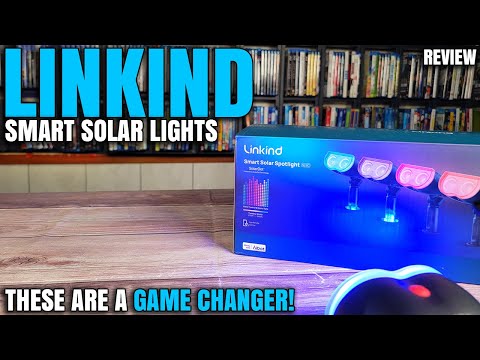
Solar spotlights focus light on specific features like trees, sculptures, or architectural details. Ground-mounted well lights sit flush with the lawn or flower bed, directing upward beams without cluttering your landscape with visible fixtures. Both types are excellent choices for garden lighting enthusiasts who want dramatic, layered illumination.
Top-Rated Outdoor Solar Lights in 2024
Below is a comparison of some of the highest-rated solar-powered outdoor lights across different categories, based on brightness, battery capacity, build quality, and customer feedback.

| Product | Type | Brightness (Lumens) | Runtime | Best For |
| URPOWER Solar Wall Lights | Solar Wall Lights | 200 lm | 12 hrs | Entryways, garages |
| BNZLIT Solar Flood Light | Solar Flood Light | 2000 lm | 10 hrs | Security, large areas |
| TomCare Solar Path Lights (8-Pack) | Solar Pathway Lights | 120 lm | 8 hrs | Garden walkways |
| Mpow Solar String Lights | Solar String Lights | Warm White | 10 hrs | Patios, decks |
| Aootek Solar Spotlight | Solar Spotlight | 500 lm | 12 hrs | Accent landscape lighting |
| LITOM Solar Motion Sensor Light | Solar Flood Light | 1500 lm | 8 hrs | Driveway security |
What to Look for When Buying the Best Outdoor Solar Lights
Not all solar outdoor lights are created equal. Before purchasing, consider these critical factors that determine real-world performance.
- Solar Panel Quality and Size – Larger monocrystalline solar panels charge batteries faster and more efficiently than cheaper polycrystalline alternatives. Look for panels rated at least 2 watts for reliable performance.
- Battery Capacity (mAh) – Higher milliamp-hour ratings mean longer runtime. Lithium-ion batteries outperform NiMH options in cold weather and have a longer lifespan.
- LED Brightness (Lumens) – Lumens measure actual light output. For pathway lighting, 50–150 lumens suffice. For security flood lights, aim for 1000 lumens or more.
- IP Rating for Weather Resistance – An IP65 or IP67 rating ensures the fixture withstands rain, snow, dust, and humidity. This is especially important for solar outdoor wall lights and ground-mounted security lights.
- Adjustable Settings – Dimmable modes, multiple lighting modes (steady, flashing, sensor-triggered), and adjustable solar panel angles give you versatility and maximize battery life.
- Installation and Mounting Options – Stake-mounted, wall-mounted, and ground-insert options make it easy to adapt fixtures to your specific outdoor environment without tools or wiring.
Expert Tips for Maximizing Solar Light Performance
Even the best solar landscape lighting system underperforms if installed incorrectly. Follow these professional tips to get the most from your solar outdoor lights.
- Position solar panels facing south (in the Northern Hemisphere) to capture maximum direct sunlight throughout the day.
- Avoid shading from trees, fences, or eaves, which dramatically reduces charging efficiency and shortens nighttime runtime.
- Clean solar panels regularly with a damp cloth to remove dust, pollen, and bird droppings that block light absorption.
- Charge lights fully for the first two to three days before relying on them, as new batteries need a full conditioning cycle.
- Use motion sensor mode strategically to extend battery life. Constant-on settings drain rechargeable batteries faster than sensor-triggered illumination.
- Remove and store lights indoors during extended cloudy periods or winter months where charging conditions are poor.
Conclusion
The best outdoor solar lights combine cutting-edge LED technology, efficient solar panels, and robust weatherproof construction to deliver reliable, energy-free illumination for any outdoor setting. From compact solar garden lights that guide visitors along your walkway to high-powered solar flood lights that protect your property, today’s options cater to every budget and application. By focusing on solar panel quality, battery capacity, lumens output, and weather resistance, you can build a solar lighting system that looks beautiful, performs consistently, and pays for itself within the first season. Start with the categories that matter most to your outdoor space, and expand your solar lighting setup gradually as you discover what works best.
Frequently Asked Questions

1. How long do outdoor solar lights last on a full charge?
Runtime depends on battery capacity, LED power draw, and ambient temperature. Most quality solar pathway lights deliver 8 to 12 hours of illumination on a full charge. High-capacity solar flood lights with lithium-ion batteries typically run 6 to 10 hours at peak brightness, while dimmed or motion-sensor modes extend runtime significantly.
2. Do solar outdoor lights work on cloudy or rainy days?
Yes, modern solar outdoor lights can still charge under overcast conditions, though at reduced efficiency. Monocrystalline solar panels perform better than alternatives in low-light scenarios. For best results on cloudy days, ensure panels are clean and positioned at optimal angles to capture available diffuse light.
3. Can I replace the batteries in outdoor solar lights?
Many solar lighting models use replaceable rechargeable batteries, typically AA or AAA NiMH or lithium-ion cells. Check the manufacturer’s specifications before purchasing replacement batteries. Using compatible, high-quality replacement batteries extends the lifespan of your solar lights and maintains consistent brightness.
4. Are outdoor solar lights worth it for home security?
Absolutely. Solar-powered security lights with PIR motion sensors serve as a strong deterrent against intruders without requiring electrical wiring or monthly energy costs. Look for models with at least 1000 lumens, adjustable detection ranges, and IP65 or higher weather resistance ratings for reliable outdoor security performance.
5. What is the difference between monocrystalline and polycrystalline solar panels in outdoor lights?
Monocrystalline solar panels are made from a single silicon crystal, offering higher efficiency (typically 18–22%) and better performance in low-light conditions. Polycrystalline panels use multiple silicon fragments and are slightly less efficient (15–17%). For outdoor solar lights, monocrystalline panels are the preferred choice because they charge faster and perform better during shorter winter days or under partial shade.
6. How do I install solar outdoor lights without damaging my yard?
Most solar pathway lights and spotlights use push-in or stake-mount designs that require no drilling. Wall-mounted solar lights typically include screws and wall anchors for secure installation. For sensitive landscaping, choose ground-level solar fixtures with flexible stakes or adhesive-backed mounts that minimize disruption to grass, plants, and hardscape surfaces.