


When it comes to upgrading your lighting setup, 4 foot LED light bulbs have become the go-to choice for homeowners, business owners, and facility managers alike. Whether you are replacing old fluorescent tubes in a garage, upgrading office ceiling fixtures, or illuminating a workshop, the four-foot LED tube offers a perfect balance of brightness, energy efficiency, and longevity. But with so many options on the market—different bulb types, ballast compatibility issues, color temperatures, and wattage ratings—it can feel overwhelming to pick the right one. This guide breaks down everything you need to know about 4 foot LED bulbs, from the basics to advanced installation tips, so you can make a confident, informed decision.

What Exactly Are 4 Foot LED Light Bulbs?
Four foot LED light bulbs, often referred to as 4-foot LED tubes or LED tube lights, are linear lighting fixtures designed to fit into standard four-foot fluorescent fixture housings. They typically measure 48 inches in length and are available in several diameters, most commonly T5, T8, and T9 form factors. Unlike traditional fluorescent tubes that rely on gas discharge and a ballast to produce light, 4 foot LED bulbs use semiconductor diodes to generate illumination, resulting in significantly lower energy consumption, reduced heat output, and a much longer operational lifespan.
These LED tubes are widely used in commercial buildings, industrial facilities, schools, retail stores, and residential garages. Their popularity has surged because they deliver superior luminous efficacy—measured in lumens per watt—while eliminating the flickering, buzzing, and warm-up delays associated with older fluorescent technology.
Key Benefits of Switching to 4 Foot LED Tubes
Making the switch from fluorescent to four foot LED light bulbs delivers a range of tangible advantages that go far beyond simple energy savings:
- Dramatic Energy Savings — A typical 4-foot LED tube draws between 18 and 40 watts, compared to 32–40 watts for a standard T8 fluorescent. That means up to 50% reduction in electricity usage for lighting.
- Extended Lifespan — Quality 4 foot LED bulbs last 50,000 hours or more, which translates to roughly 15–20 years of typical use. You will spend far less on replacements.
- Instant Full Brightness — Unlike CFLs or aging fluorescents that take time to warm up, LED tubes reach full output the moment you flip the switch.
- No Mercury or Hazardous Materials — Fluorescent tubes contain mercury, which creates disposal and safety concerns. LED tubes are completely free of toxic chemicals.
- Improved Light Quality — Modern 4-foot LEDs offer high Color Rendering Index (CRI) ratings, often 80+ or even 90+, making colors appear more natural and vibrant under the light.
- Reduced Maintenance Costs — Fewer bulb changes mean less labor and fewer maintenance calls, especially in large commercial buildings with high ceilings.
Understanding Luminous Efficacy and Lumens
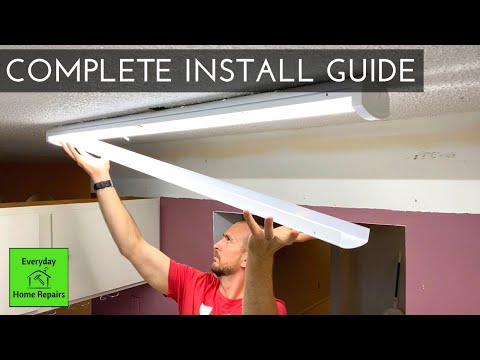
When shopping for four-foot LED bulbs, pay close attention to lumen output rather than wattage alone. A good benchmark is around 100–130 lumens per watt for high-quality LED tubes. For example, a 24-watt 4-foot LED producing 2,500 lumens is far more efficient than a 32-watt fluorescent producing only 2,500 lumens while consuming significantly more power.
Types of 4 Foot LED Light Bulbs
Not all 4-foot LED tubes are created equal. Understanding the different categories helps you choose the right product for your specific setup.
Ballast-Bypass (Direct-Wire) LED Tubes
These tubes require you to remove or bypass the existing ballast and wire the lamp directly to the line voltage. Direct-wire 4 foot LED bulbs are the most energy-efficient option because they eliminate ballast losses, which can consume 5–15 watts on their own. Installation is slightly more involved but pays off in long-term savings and reliability.
Ballast-Compatible (Plug-and-Play) LED Tubes
Plug-and-play tubes work with your existing ballast, requiring no rewiring. They are the easiest option for a quick retrofit—just pull out the old fluorescent and push in the LED tube. However, keep in mind that the ballast still draws power, so your energy savings will be slightly lower compared to direct-wire models.
T5 vs. T8 vs. T9 LED Tubes
The letter designation refers to the tube diameter in eighths of an inch. T5 tubes are ⅝ inch in diameter, T8 tubes are 1 inch, and T9 tubes are 9/8 inch. T8 is the most common replacement for standard fluorescent fixtures, while T5 is often used in newer, high-output applications. Always verify your fixture’s compatibility before purchasing.
How to Choose the Right 4 Foot LED Bulb for Your Space
Selecting the perfect 4 foot LED light bulb involves considering several factors beyond just brightness:
- Color Temperature (Kelvin): Choose 3000K for warm, inviting light in living spaces or retail environments; 4000K for a clean, neutral tone in offices and kitchens; and 5000K or 6000K for crisp, daylight-like illumination in workshops, garages, and industrial settings.
- CRI Rating: If accurate color representation matters—such as in art studios, retail displays, or medical facilities—look for a CRI of 80 or higher, with premium options reaching 95+.
- Dimming Compatibility: Not all LED tubes are dimmable. If you need dimmable 4-foot LEDs, confirm that both the tube and your dimmer switch are compatible.
- Housing and Fixture Type: Ensure the bulb fits your fixture’s socket type (shunted or unshunted tombstones) and has proper ratings for enclosed or damp locations if needed.
Comparison Table: Common 4 Foot LED Tube Options
| Type | Wattage | Lumens | Color Temp | Ballast Required | Lifespan |
| T8 Plug-and-Play LED | 24W | 2,500 lm | 4000K | Yes | 50,000 hrs |
| T8 Direct-Wire LED | 20W | 2,300 lm | 4000K | No (bypass ballast) | 50,000 hrs |
| T5 High-Output LED | 28W | 3,200 lm | 5000K | Yes | 45,000 hrs |
| T9 Retrofit LED | 22W | 2,600 lm | 3000K | No (bypass ballast) | 40,000 hrs |
Installation Tips and Compatibility Considerations
Installing a 4 foot LED bulb is straightforward, but there are important details to get right:
- Always turn off the power at the circuit breaker before starting any electrical work.
- For plug-and-play tubes: Simply remove the old fluorescent, match the pins to the sockets, and push the LED tube in until it clicks.
- For direct-wire tubes: You will need to remove the ballast, reconnect the line voltage wires directly to the socket holders, and ensure all connections are secure and insulated.
- Check tombstone compatibility. Shunted tombstones are common in older fixtures and may need to be replaced with unshunted tombstones for direct-wire installations.
- Use appropriate wire nuts and electrical tape to ensure safe, code-compliant connections.
If you are not comfortable working with electrical wiring, hiring a licensed electrician for a direct-wire retrofit is a smart investment. The cost is typically modest, and the long-term energy savings will offset it quickly.
Energy Savings and Return on Investment
One of the most compelling reasons to upgrade to four foot LED light bulbs is the return on investment. Consider a typical commercial office with 20 four-foot fluorescent fixtures running 10 hours a day, 5 days a week. Replacing each 32-watt fluorescent with a 20-watt LED saves approximately 12 watts per fixture. Over a year, that adds up to roughly 500 kWh saved per fixture—and at an average commercial electricity rate of $0.12 per kWh, that is significant savings across an entire building.
Beyond electricity, you also save on replacement bulbs and labor. A fluorescent tube may need replacing every 2–3 years, while a quality LED tube will last 10–15 years or more. Over a 10-year period, the cumulative savings can be staggering.
Common Applications for 4 Foot LED Bulbs
The versatility of 4-foot LED tubes makes them suitable for a remarkably wide range of environments:
- Commercial Offices: Clean, flicker-free lighting improves productivity and reduces eye strain.
- Retail Stores and Showrooms: High CRI LEDs make products and displays look their best.
- Warehouses and Industrial Facilities: High-lumen T5 and T8 LED tubes provide powerful overhead illumination for safety and visibility.
- Residential Garages and Basements: Easy retrofit into existing fluorescent fixtures with minimal effort.
- Schools and Classrooms: Durable, long-lasting LEDs reduce maintenance disruptions and create a better learning environment.
- Hospitals and Healthcare Facilities: Mercury-free, flicker-free lighting supports patient comfort and staff well-being.
Expert Tips for Getting the Most Out of Your 4 Foot LED Bulbs

Here are some professional recommendations that separate a good LED installation from a great one:
- Buy from reputable brands like Philips, Feit Electric, Sylvania, or Barrage Lighting to ensure consistent quality and warranty coverage.
- Check the warranty. Premium 4-foot LED tubes often come with 5-year or longer warranties, which reflects manufacturer confidence in their product.
- Consider ambient temperature. LED performance can degrade in extremely hot enclosed fixtures—look for bulbs rated for high-temperature environments if needed.
- Mix and match color temperatures by zone. Use warmer tones in break rooms and cooler tones in work areas to create a comfortable, functional environment.
- Keep spare tubes on hand. Even with a long lifespan, having a backup tube minimizes any downtime if a unit fails prematurely.
Conclusion
Upgrading to 4 foot LED light bulbs is one of the smartest investments you can make for any space. Whether you prioritize energy savings, light quality, or long-term reliability, modern LED tubes deliver on all fronts. By understanding the differences between ballast-compatible and direct-wire options, selecting the right color temperature and form factor, and following proper installation practices, you can enjoy better lighting for decades to come. The initial effort and cost are quickly recovered through lower utility bills and dramatically reduced maintenance.
Frequently Asked Questions
Can I install a 4 foot LED bulb in a fixture that currently has a fluorescent ballast?
Yes, if you choose a plug-and-play LED tube that is compatible with your existing ballast. However, for maximum energy efficiency, a ballast-bypass direct-wire installation is recommended, as it eliminates the wasted power consumed by the ballast itself.
How do I know if my 4 foot LED bulb is dimmable?
Check the product packaging or specifications for a “dimmable” rating. Additionally, verify that your wall dimmer is compatible with LED loads. Using a non-compatible dimmer can cause flickering or buzzing.
What is the difference between a T8 and T5 4 foot LED tube?
The main difference is diameter—T8 tubes are 1 inch in diameter while T5 tubes are ⅝ inch. T8 tubes are the standard replacement for most fluorescent fixtures, while T5 tubes are typically higher-output and used in newer fixtures designed specifically for them.
Do 4 foot LED bulbs work in cold garages and outdoor settings?
Many 4-foot LED tubes are rated for cold-temperature operation and perform exceptionally well in garages, warehouses, and outdoor fixtures. However, always check the product specifications for the minimum operating temperature rating, especially if the fixture is exposed to harsh winter conditions.
What color temperature is best for a home garage?
For a home garage, 4000K to 5000K is typically ideal. This range provides bright, neutral-to-daylight light that improves visibility for tasks like working on vehicles or organizing tools, without the harsh blue tone of 6000K bulbs.