When you’re driving at night or navigating through poorly lit roads, the brightness of your headlights can mean the difference between a safe journey and a dangerous one. The brightest LED headlight bulbs have revolutionized automotive lighting, offering drivers exceptional visibility, energy efficiency, and a modern aesthetic that traditional halogen bulbs simply cannot match. But with dozens of options flooding the market, choosing the right one can feel overwhelming. This comprehensive guide breaks down everything you need to know about the brightest LED headlight bulbs available today — from lumen output and color temperature to installation tips, legal considerations, and top product recommendations.
Why LED Headlight Bulbs Are Dominating the Market
LED technology has rapidly evolved, and today’s high-lumen LED headlight bulbs deliver performance that rivals and sometimes exceeds factory-installed HID (High-Intensity Discharge) systems. Unlike halogen bulbs that waste most of their energy as heat, LED bulbs convert a significantly higher percentage of electrical power into visible light. This efficiency translates into brighter illumination, lower power consumption, and a longer operational lifespan.
Several factors have driven the surge in popularity of LED headlight upgrades:
- Superior luminous output — modern LED bulbs now reach 10,000+ lumens per pair
- Instant full brightness — no warm-up time like HID bulbs
- Lower power draw — typically 18–35 watts compared to 55 watts for halogens
- Extended lifespan — 30,000 to 50,000 hours versus 1,000 hours for halogens
- Compact, fanless designs — easier to fit into stock headlight housings
Understanding Brightness Metrics: Lumens, Lux, and Kelvin
Not all brightness measurements are created equal, and understanding the difference between lumens, lux, and color temperature is essential when evaluating the best LED headlight bulbs for visibility.
Lumens vs. Lux
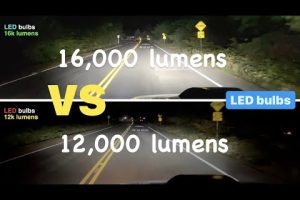
Lumens measure the total light output of a bulb, while lux measures the intensity of light that actually reaches a surface at a specific distance. A bulb rated at 12,000 lumens sounds impressive, but if it lacks proper beam focus, much of that light scatters uselessly or blinds oncoming traffic. High-quality LED headlight bulbs prioritize both high lumens and well-designed optics that project light efficiently down the road.
Color Temperature (Kelvin)
Color temperature, measured in Kelvin (K), determines the appearance of the light. For headlight applications, most drivers prefer bulbs in the 5000K–6500K range, which produces a crisp white or slightly cool white light that mimics natural daylight. Bulbs above 6500K start producing a blue-tinted glow that reduces visibility in rain and fog, making them less practical for everyday driving.
Top Brightest LED Headlight Bulbs in 2024
The market for the brightest LED headlight bulbs is competitive, with several brands standing out for their combination of raw output, beam pattern quality, and reliability. Below is a detailed comparison of leading options.
| Brand & Model | Lumens (per pair) | Color Temp | Wattage | Key Feature |
| XHP70.3 HI Series | 12,000 LM | 6000K | 35W | Active cooling fan, slim profile |
| Lumens L5 Ultra | 11,500 LM | 5500K | 32W | No-fan design, aluminum heatsink |
| Auxbeam AFEDR-10 | 10,800 LM | 6000K | 30W | IP68 waterproof, fanless |
| SEALIGHT S9+ | 10,000 LM | 6500K | 28W | Plug-and-play, compact |
| BEAMTECH H11 LED | 9,500 LM | 6000K | 28W | Budget-friendly, dual-row design |
Each of these bulbs represents a different balance of brightness, build quality, and price point. The XHP70.3 series consistently ranks at the top for raw output, while the Lumens L5 Ultra excels in designs that eliminate fans entirely, reducing potential failure points.
How to Choose the Brightest LED Headlight Bulb for Your Vehicle
Selecting the best high-lumen LED headlight replacement involves more than just chasing the highest lumen number. Here are critical considerations that experienced installers and automotive lighting specialists recommend.
1. Check Your Vehicle’s Socket Type
LED headlight bulbs come in numerous sizes, including H1, H4, H7, H11, 9005, 9006, and D1S/D2S (for HID ballast-compatible housings). Always verify your vehicle’s bulb type before purchasing. Using the wrong size will not only prevent installation but can also damage your electrical system.
2. Prioritize Beam Pattern Over Raw Lumens
A bulb that throws light everywhere may read as bright on paper, but a focused, well-shaped beam pattern is what actually improves road visibility. Look for bulbs with precision-molded reflectors or lenses that direct light into a clean cutoff pattern, illuminating the road without blinding other drivers.
3. Consider Heat Management
The brightest LED bulbs generate significant heat. Bulbs with active cooling fans offer superior thermal management but may have a slightly bulkier base. Fanless designs using large aluminum fins are more compact but may run warmer over extended use. Choose based on your headlight housing’s ventilation and available space.

4. Verify Canbus and Anti-Flicker Compatibility
Many modern vehicles use Canbus systems that monitor bulb status. Aftermarket LED bulbs can trigger error messages or flickering if they lack proper decoding resistors. Premium LED headlight bulbs include built-in Canbus decoders, ensuring seamless integration with your vehicle’s computer system.
Installation Tips for Maximum Performance
Even the best LED headlight bulb upgrade will underperform if installed incorrectly. Follow these expert tips to get the most out of your new bulbs.
- Clean the headlight housing before installation — dust and debris inside the housing scatter light and reduce clarity.
- Handle bulbs with gloves — oils from your skin on the LED chip or glass can create hot spots and shorten bulb life.
- Test the beam pattern against a wall before final mounting — adjust the aiming screws on your housing to optimize the cutoff line.
- Check for moisture ingress — if your headlight housing has been opened before, ensure it is properly sealed to prevent condensation on the new LED chip.
- Use anti-flicker harnesses if your vehicle reports errors after installation — these provide a stable power supply and eliminate Canbus issues.
Legal Considerations and Safety Concerns
Brightness comes with responsibility. In many jurisdictions, aftermarket headlight bulbs must comply with specific regulations regarding intensity, beam pattern, and color temperature. Bulbs that are too bright or improperly aimed can blind oncoming drivers, creating serious safety hazards and potentially resulting in fines or failed vehicle inspections.
Before installing ultra-bright LED bulbs, check your local traffic laws and consider having your headlights professionally aimed. A properly aimed 10,000-lumen bulb is safer and more effective than a misaligned 12,000-lumen one that blinds everyone on the road.
FAQs: Brightest LED Headlight Bulbs

What is the brightest LED headlight bulb currently available?
The XHP70.3 HI Series and similar multi-LED platform bulbs currently hold the top spot for raw lumen output, reaching up to 12,000 lumens per pair. However, the “brightest” bulb for your specific vehicle depends on beam pattern quality, proper fitment, and how well the bulb’s optics match your headlight housing.
Are 6000K LED headlight bulbs brighter than 4300K bulbs?
In terms of total lumens, 6000K and 4300K bulbs can be identical in output. However, 4300K bulbs emit a warmer, yellowish-white light that penetrates fog, rain, and dust more effectively. The 6000K bulbs appear brighter to the human eye due to their whiter color, but they may reduce effective visibility in adverse weather conditions.
Can I install the brightest LED headlight bulbs myself?
Yes, most LED headlight bulbs are designed for straightforward plug-and-play installation. The process typically takes 15–30 minutes per bulb and requires no wiring modifications. However, if you are unsure about socket compatibility or beam aiming, it is advisable to have a professional mechanic handle the installation.
Do the brightest LED headlight bulbs burn out quickly?
Quality LED headlight bulbs from reputable brands are rated for 30,000 to 50,000 hours of operation. If a bulb fails prematurely, the most common causes are poor heat dissipation, incorrect voltage, or a faulty Canbus decoder. Investing in bulbs with robust thermal management and built-in circuit protection significantly extends their lifespan.
Will the brightest LED bulbs work with my vehicle’s automatic high-beam system?
Most LED headlight bulbs are compatible with automatic high-beam systems, but some vehicles with sophisticated light sensors may detect the rapid on-off cycling of LEDs and interpret it as a malfunction. Choosing bulbs with integrated anti-flicker resistors or using a dedicated decoder resolves this issue in the vast majority of cases.
Final Thoughts
The search for the brightest LED headlight bulbs is ultimately about more than just numbers on a product listing. It is about finding the perfect balance of raw output, beam quality, thermal performance, and compatibility with your specific vehicle. Whether you are upgrading a decade-old sedan or modernizing a new vehicle’s factory lighting, today’s LED technology offers an extraordinary range of options that deliver safer, clearer, and more efficient nighttime driving. Choose wisely, install correctly, and aim precisely — and you will immediately notice the difference every single time you turn on your headlights.