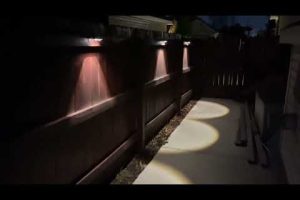
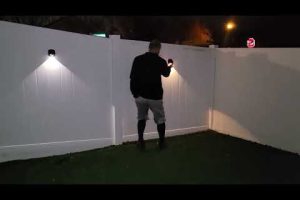
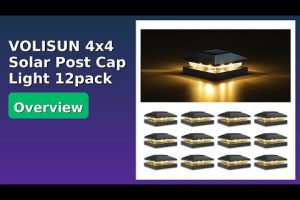
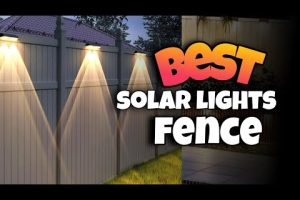
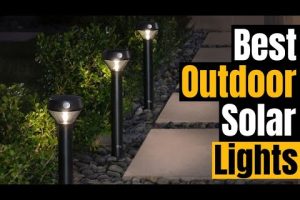
When you think about transforming the look, safety, and security of your property after dark, fence solar post lights deserve a spot at the top of your list. These compact, self-contained fixtures turn ordinary wooden or metal fence posts into stunning focal points while illuminating pathways, driveways, garden borders, and deck areas without adding a single cent to your electricity bill. Whether you are a homeowner looking for a simple backyard upgrade or a property manager seeking a scalable outdoor lighting solution, fence solar post lights combine convenience, aesthetics, and energy efficiency in one easy-to-install package. In this comprehensive guide, we dive deep into everything you need to know — from how they work and the different types available to expert installation tips, maintenance best practices, and answers to the most frequently asked questions about solar fence lighting.
What Are Fence Solar Post Lights?
Fence solar post lights are standalone or clip-on lighting fixtures designed to mount directly onto fence posts, deck posts, pergola pillars, or railing columns. Each unit contains a small photovoltaic panel, a rechargeable battery (typically lithium-ion or NiMH), an LED light source, and a built-in sensor — all packaged into a weather-resistant housing. During daylight hours, the solar panel absorbs sunlight and converts it into electrical energy stored in the internal battery. At nightfall, the automatic photoresistor or dusk-to-dawn sensor triggers the LED array, bathing your fence line in a warm, welcoming glow.
These lights are engineered for outdoor durability. Most models carry IP65 or IP67 waterproof ratings, meaning they can withstand heavy rain, snow, dust, and temperature fluctuations ranging from sub-freezing winters to scorching summers. Because they operate independently of your home’s electrical grid, fence solar post lights are ideal for remote areas, detached garages, garden fences, and any location where running underground wiring would be impractical or prohibitively expensive.
How Do Fence Solar Post Lights Work?
The underlying technology is straightforward yet effective. A crystalline silicon or amorphous solar cell sits atop or alongside the fixture and captures photons from sunlight. This generates a direct current (DC) that flows through a charge controller — a small circuit board that regulates voltage and prevents overcharging of the internal battery. As ambient light levels drop in the evening, the charge controller signals the LED driver to power up the light array.
Modern fence solar post lights use advanced LED chips that deliver luminous efficacy rates of 80 to 150 lumens per watt, meaning they produce bright, focused light while consuming minimal energy. The rechargeable battery capacity — typically between 1000 mAh and 2000 mAh — determines how many hours the light will shine after a full day of charging. Most quality models provide 6 to 10 hours of runtime on a single full charge, though this varies based on geographic location, seasonal sun exposure, and panel efficiency.
Types of Fence Solar Post Lights
Not all solar fence post lights are created equal. Understanding the different categories helps you choose the right product for your specific needs.
1. Stake-Mounted Solar Post Caps
These are the most popular option for residential fences. They slide directly onto the top of a wooden or metal fence post like a decorative cap. Stake-mounted models typically feature a solar panel integrated into the top dome and LED lights facing downward or in multiple directions. They are perfect for accent lighting along garden fences and decorative picket borders.
2. Clip-On Fence Rail Lights
Clip-on models attach to the horizontal rails of chain-link or metal fences using adjustable clamps or brackets. These fixtures often feature side-facing LED panels that cast light along the fence line rather than downward. They work exceptionally well for security lighting and perimeter illumination around commercial properties and large residential lots.
3. Ground-Inground Solar Post Lights
For a sleek, modern look, ground-inground solar fixtures are inserted directly into the soil next to the fence post. They create a dramatic uplighting effect that highlights the post structure while also serving as pathway markers. These are popular in contemporary landscaping and high-end residential developments.
4. Solar Post Cap with Motion Sensor
Some fence solar post lights include integrated motion detection sensors using passive infrared (PIR) technology. When movement is detected within a set range — typically 10 to 30 feet — the light brightens to full intensity and then dims back to a standby mode after a delay. These are ideal for enhancing security around entry gates, side yards, and dark corners of your property.
Benefits of Installing Fence Solar Post Lights

The advantages of choosing solar-powered lighting for your fence posts go well beyond just saving money on your electric bill. Here is a detailed look at why these fixtures are gaining rapid popularity among homeowners and landscape designers alike.
- Zero Electricity Costs — Once installed, fence solar post lights draw power exclusively from the sun. There are no wiring costs, no monthly utility charges, and no need for an electrician.
- Easy Installation — Most models require no tools beyond a screwdriver. Post caps simply slide on, stake lights push into the ground, and clip-on versions attach with spring-loaded brackets. You can light an entire fence line in under an hour.
- Eco-Friendly Operation — Solar lighting produces no carbon emissions during use, making it a sustainable choice that aligns with green building practices and energy-efficient home certifications.
- Enhanced Security — A well-lit perimeter deters trespassers, animals, and potential intruders. Motion-sensor solar post lights add an extra layer of protection by illuminating unexpected activity instantly.
- Curb Appeal and Property Value — Thoughtfully placed solar fence lighting dramatically improves the visual appeal of your home’s exterior, which can positively influence buyers if you ever decide to sell.
- Low Maintenance — LED bulbs last 25,000 to 50,000 hours, and quality solar panels maintain efficient output for 10 to 20 years. Periodic cleaning of the solar panel and battery replacement every 2 to 3 years are typically the only upkeep required.
Key Features to Look For When Buying
Not every fence solar post light on the market delivers the same performance. Use these criteria to evaluate products before purchasing.
- Solar Panel Efficiency — Monocrystalline panels convert 18 to 23 percent of sunlight into energy, significantly outperforming polycrystalline or thin-film alternatives.
- Battery Capacity and Type — Look for lithium iron phosphate (LiFePO4) or lithium-ion batteries with at least 1200 mAh capacity for consistent overnight illumination.
- LED Quality and Color Temperature — Choose LEDs rated at 3000K to 4000K for warm, inviting light. RGB or multi-color options add decorative flair but are less practical for security purposes.
- IP Rating — A minimum IP65 rating ensures protection against water jets and dust infiltration. IP67 is even better for areas with heavy rainfall or snow.
- Adjustable Brightness Modes — Dimmable settings and multiple modes (full brightness, low ambient, motion-activated) extend battery life and offer flexibility.
- Mounting Versatility — Universal mounting brackets that fit standard 2×2-inch to 4×4-inch posts give you the most installation flexibility.
- Warranty and Certification — Look for products with at least a 2-year warranty and certifications such as UL, ETL, or CE to ensure safety and quality standards.

Comparison: Top Fence Solar Post Light Categories
| Category | Best For | Avg. Runtime | Brightness Range | Price Point |
| Post Cap Solar Lights | Aesthetic accent lighting | 6–8 hours | 10–50 lumens | Budget-friendly ($10–$25 each) |
| Clip-On Rail Solar Lights | Security perimeter lighting | 8–10 hours | 50–200 lumens | Mid-range ($15–$40 each) |
| Ground-Inground Solar Lights | Modern landscaping and uplighting | 6–10 hours | 20–100 lumens | Premium ($20–$50 each) |
| Motion Sensor Solar Post Lights | Security and energy conservation | 8–12 hours (with dim standby) | 100–300 lumens | Mid-to-premium ($25–$55 each) |
Installation and Placement Best Practices
Proper placement is the single most important factor in getting the best performance from your fence solar post lights. Follow these expert recommendations to maximize brightness and longevity.
- Face Solar Panels South — In the Northern Hemisphere, orienting solar panels toward true south ensures maximum sun exposure throughout the day. If your fence runs east-west, this is especially critical.
- Avoid Shading — Overhanging tree branches, tall shrubs, or adjacent structures can cast shadows on the solar panel and drastically reduce charging efficiency. Trim vegetation or reposition lights accordingly.
- Space Lights Evenly — For consistent illumination along a fence line, space lights 6 to 10 feet apart. Closer spacing creates brighter coverage but uses more units; wider spacing is better for subtle accent lighting.
- Clean Panels Regularly — Dust, pollen, bird droppings, and snow accumulation on the solar panel surface can reduce energy absorption by up to 30%. Wipe panels with a damp cloth every two weeks during pollen season.
- Pre-Charge Before First Use — Charge the unit in direct sunlight for a full 24 to 48 hours before first activation. This conditions the battery and ensures optimal performance from night one.
- Use Reflective Surfaces — Painting fence posts white or installing reflective tape nearby can amplify the effect of your solar post lights by bouncing light back into the surrounding area.
Maintenance and Longevity Tips
Fence solar post lights are designed for long-term use, but a few simple maintenance habits will keep them performing at peak levels for years.
- Replace rechargeable batteries every 2 to 3 years, or sooner if you notice reduced runtime.
- Inspect wiring connections and mounting hardware seasonally for corrosion or loosening.
- Apply a thin layer of silicone sealant around the base of post cap lights in regions with heavy snow or rain to prevent water intrusion.
- During winter months with shorter daylight hours, consider removing the units and storing them indoors to preserve battery health, especially in climates below freezing.
- Update firmware or switch modes on smart solar lights if your model connects via Bluetooth or a companion app.
Final Thoughts
Fence solar post lights represent one of the smartest investments a homeowner can make in outdoor lighting. They eliminate the complexity and cost of traditional wired systems while delivering reliable, beautiful illumination that enhances safety, security, and curb appeal. With the right product selection, strategic placement, and minimal maintenance, your solar fence posts will light up your property beautifully for a decade or more — powered entirely by the sun. Whether you are upgrading a simple wooden privacy fence or illuminating a sprawling estate perimeter, there is a solar post light solution perfectly suited to your needs.
Frequently Asked Questions (FAQs)
1. How long do fence solar post lights last on a single charge? Most quality fence solar post lights provide between 6 and 10 hours of continuous illumination on a full charge. Motion-sensor models can extend runtime to 10–12 hours by using dim standby mode and only activating at full brightness when movement is detected.
2. Do fence solar post lights work on cloudy or rainy days? Yes, but with reduced efficiency. Monocrystalline solar panels can still generate 10 to 25 percent of their rated output on overcast days. Models with larger battery capacities (2000 mAh and above) handle cloudy periods better by storing reserves from sunnier days.
3. Can I install fence solar post lights on a metal or vinyl fence? Absolutely. Clip-on and bracket-mounted solar post lights are specifically designed to work on metal, vinyl, and chain-link fences. For wooden posts, post cap models are the most straightforward option and require no additional hardware.
4. What is the difference between solar post cap lights and solar stake lights? Post cap lights mount directly onto the top of a fence post, while stake lights are driven into the ground next to the post. Post caps provide downward or omnidirectional glow from an elevated position, whereas stake lights offer ground-level uplighting and are better suited for highlighting the base of a post or marking garden paths.
5. How do I know if my solar panel needs cleaning or replacement? If your fence solar post lights are turning on earlier in the evening or shutting off before morning despite adequate daytime sun exposure, dirty or damaged solar panels are the most likely culprit. Clean the panel surface first; if performance does not improve after cleaning, the panel may need replacement.