Indoor light solar technology has quietly revolutionized the way we power everyday devices, and the momentum behind this field is only accelerating. If you have been hearing about indoor solar panels but are unsure what they are, how they work, or whether they are worth investing in, you are in the right place. Unlike traditional photovoltaic systems that depend on direct sunlight, indoor light solar solutions are engineered to harvest energy from ambient artificial lighting and even natural window light. This makes them uniquely suited for smart home devices, wireless sensors, IoT gadgets, and a growing range of commercial applications. In this comprehensive guide, we will explore every angle of indoor photovoltaic technology, from the underlying science to practical buying and deployment advice. Whether you are a curious beginner or a professional looking to integrate these systems, this article covers beginner fundamentals through advanced strategies.
What Is Indoor Light Solar and How Does It Work?
Indoor light solar refers to photovoltaic cells specifically designed to convert artificial or diffused indoor light into electrical energy. Traditional solar panels optimize for the full solar spectrum and peak irradiance levels around 1000 watts per square meter outdoors. Indoor environments, by contrast, offer dramatically lower light intensity — typically between 10 and 500 lux depending on the room and lighting type. This is where indoor solar cells differentiate themselves through specialized materials and architectures tuned for low-light performance.
The science behind indoor light harvesting involves the photovoltaic effect, just like outdoor panels. When photons strike the semiconductor material inside the cell, they excite electrons and generate a current. However, indoor solar cells are designed with bandgap energies that align more closely with the emission spectra of common indoor light sources such as LED bulbs, fluorescent tubes, and halogen lamps. This spectral matching is critical — it is the difference between a panel that sits idle and one that produces usable power under a desk lamp.
Key factors that determine indoor solar performance include light intensity, spectral distribution, cell material, and angle of incidence. Understanding these variables helps users make informed decisions about placement and product selection.
Types of Indoor Solar Panel Technologies
Not all indoor light solar cells are created equal. Several distinct technologies dominate the market, each with unique strengths and trade-offs that suit different use cases.
Dye-Sensitized Solar Cells (DSSC)
Dye-sensitized solar cells are among the most popular indoor photovoltaic technologies. They use a photosensitive dye layered on a titanium dioxide semiconductor. DSSC cells excel under low-light and fluorescent lighting conditions, which makes them a favorite for indoor applications. They are flexible, semi-transparent, and relatively inexpensive to manufacture. Typical power conversion efficiencies for DSSC cells under indoor lighting range from 15% to 30%, depending on the specific light source and cell design.
Perovskite Indoor Solar Cells
Perovskite-based cells represent the cutting edge of indoor light solar research. Their tunable bandgap allows engineers to fine-tune absorption for specific indoor light spectra, particularly the narrow peaks emitted by LED lighting. Perovskite cells have demonstrated efficiencies exceeding 30% under standard indoor illumination conditions, making them the most promising candidate for next-generation indoor photovoltaics. Challenges remain around long-term stability and scalability, but rapid progress in encapsulation techniques is addressing these concerns.
Amorphous Silicon Cells
Amorphous silicon has been a workhorse in the indoor solar market for years. These cells are durable, stable, and well-suited for low-power applications like calculators, remote controls, and small sensors. Their efficiency under indoor conditions is moderate, typically in the range of 7% to 12%, but their reliability and low cost make them a practical choice for mass-market consumer electronics.
Organic Photovoltaics (OPV)
Organic solar cells use carbon-based compounds to absorb light. They are lightweight, flexible, and can be printed using roll-to-roll manufacturing processes. OPV cells perform reasonably well under indoor light and are particularly attractive for applications where aesthetics and form factor matter, such as building-integrated photovoltaics and wearable devices.
Where Indoor Light Solar Works Best
Understanding the optimal deployment environments for indoor solar panels is essential for maximizing energy yield. The following conditions and locations tend to produce the best results:
- Offices with LED ceiling lighting: Modern LED panels emit light in spectra that align well with indoor solar cell bandgaps, making offices ideal harvesting environments.
- Retail and commercial storefronts: Fluorescent and LED lighting in stores and warehouses provides consistent illumination that indoor panels can exploit throughout the day.
- Near windows with natural daylight: Diffused natural light entering through windows offers higher intensity than purely artificial sources, boosting output significantly.
- Kitchens and living rooms: Areas with multiple light sources and extended daily usage hours accumulate meaningful energy over time.
- Healthcare and industrial facilities: Spaces that remain lit 24/7 provide continuous charging opportunities for sensors and monitoring equipment.
Conversely, dimly lit hallways, closets, and rooms with minimal artificial lighting will yield very little energy and are generally poor candidates for indoor light solar installations.
Applications of Indoor Photovoltaic Technology
The practical applications of indoor solar cells extend far beyond simple novelty. Here are some of the most impactful use cases driving adoption across industries:
- IoT Sensors and Smart Home Devices: Wireless temperature sensors, occupancy detectors, and smart switches powered by indoor light solar eliminate the need for battery replacements. Companies like EnOcean and Xiaomi have integrated indoor photovoltaic cells into their product lines to achieve maintenance-free operation.
- Building Automation Systems: Light-powered sensors for HVAC control, lighting management, and security systems reduce wiring costs and simplify installation in large commercial buildings.
- Consumer Electronics: Remote controls, keyboards, calculators, and e-book readers increasingly feature small indoor solar cells to extend battery life or operate entirely without disposable batteries.
- Wearables and Medical Devices: Smartwatches, fitness trackers, and continuous glucose monitors benefit from indoor solar harvesting, reducing charging frequency and improving user convenience.
- Asset Tracking and Logistics: RFID tags and BLE beacons powered by ambient indoor light enable real-time inventory tracking in warehouses without battery maintenance.
Indoor vs Outdoor Solar Panels: Key Differences
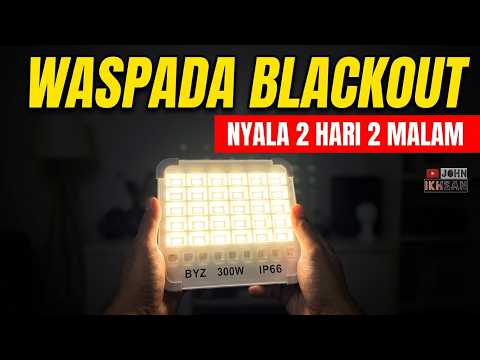
While both technologies rely on the photovoltaic effect, indoor and outdoor solar panels differ in fundamental ways that directly impact their suitability for specific environments.
| Feature | Indoor Light Solar | Outdoor Solar Panels |
| Optimal Light Intensity | 10–500 lux | 30,000–100,000 lux |
| Primary Light Sources | LED, fluorescent, halogen | Direct and diffused sunlight |
| Spectral Tuning | Matched to artificial spectra | Matched to full solar spectrum |
| Typical Efficiency (indoor) | 15–30% under LEDs | 5–22% under sunlight |
| Power Output per Area | Low (microwatts to milliwatts) | High (watts per square meter) |
| Cost per Watt | Higher for low volumes | Lower at scale |
| Common Materials | DSSC, perovskite, OPV, a-Si | Monocrystalline, polycrystalline silicon |
| Primary Use Case | Low-power electronics, IoT | Residential and grid-scale energy |

This comparison makes one thing clear: indoor light solar and outdoor solar panels serve entirely different purposes, and choosing the wrong type for your application will lead to disappointing results. Indoor panels are not designed to replace rooftop solar arrays, and outdoor panels perform poorly under the low-intensity conditions found inside buildings.
Expert Tips for Maximizing Indoor Solar Performance
Getting the most out of your indoor photovoltaic setup requires more than just placing a panel on a windowsill. Here are practical, field-tested recommendations:
- Match your panel to your light source. If your space uses primarily LED lighting, choose a cell optimized for the blue-white LED spectrum. Fluorescent environments call for different spectral tuning. This match directly impacts conversion efficiency.
- Minimize distance from the light source. Light intensity drops exponentially with distance due to the inverse square law. Placing your indoor solar panel within one to two meters of a ceiling light dramatically improves energy output.
- Keep panels clean and unobstructed. Dust, grime, and decorative covers can block significant percentages of available light. A simple wipe-down routine maintains performance.
- Use power management circuitry. Indoor solar panels produce intermittent and low-power output. Integrating a small energy harvesting IC with a supercapacitor or rechargeable battery ensures a stable power supply for connected devices.
- Angle panels toward the light source. Even though indoor light comes from overhead fixtures rather than the sun, orienting the cell surface perpendicular to the light beam maximizes photon capture.
- Combine multiple small panels for higher voltage. For devices that need more than a single cell provides, wiring indoor solar panels in series can achieve the voltage thresholds required by sensors, microcontrollers, and Bluetooth modules.
The Future of Indoor Light Solar Technology
The indoor photovoltaic market is projected to grow substantially over the next decade, driven by the explosion of IoT devices, smart building infrastructure, and the global push toward sustainable energy. Perovskite cells are expected to lead the next generation of indoor light solar products, offering higher efficiencies, lower manufacturing costs, and greater design flexibility. Researchers are also exploring hybrid cells that combine organic and inorganic materials to capture a broader range of indoor spectra. As building codes increasingly mandate energy-efficient designs and wireless sensors become standard in modern construction, demand for maintenance-free, light-powered devices will only intensify.
For consumers and businesses alike, the message is clear: indoor light solar is no longer a niche curiosity but a practical, scalable solution for powering the connected devices that define modern life. Whether you are retrofitting an existing space or designing a new smart building, integrating indoor photovoltaic technology is a forward-thinking investment that pays dividends in reduced maintenance, lower environmental impact, and greater operational independence.
Frequently Asked Questions
Can indoor solar panels fully power a smartphone?
Currently, indoor light solar panels cannot generate enough power to charge a smartphone directly in a reasonable timeframe. However, they are excellent at trickle-charging small batteries or powering low-energy wireless sensors and IoT devices. Future advances in perovskite and organic cell efficiency may change this calculus.
How much power does an indoor solar panel produce under office lighting?
A typical indoor photovoltaic cell measuring a few square centimeters can produce between 10 and 100 microwatts under standard office LED lighting at around 300 to 500 lux. Larger panels or arrays can scale this output to power sensors, displays, and microcontrollers with careful power management.
Do indoor solar panels work under LED bulbs?
Yes, indoor light solar panels are specifically designed to perform well under LED lighting. Modern indoor cells are optimized for the spectral output of LEDs, which dominate indoor illumination in homes, offices, and retail spaces. Their conversion efficiency under LEDs is typically higher than under natural window light.
What is the lifespan of indoor solar panels?
Lifespan varies by technology. Amorphous silicon cells can last 10 to 15 years with stable performance. DSSC cells have demonstrated 5 to 10 years in indoor environments. Perovskite cells are still maturing, but encapsulation advances are pushing their operational lifespan toward 10 years and beyond, making them increasingly viable for commercial deployment.
Are indoor solar panels expensive to purchase?
Small indoor solar cells are relatively affordable, often costing just a few dollars per unit when purchased in volume. The cost per watt is higher than outdoor panels due to lower production volumes and specialized manufacturing, but for the low-power applications they serve, the price point is highly competitive compared to disposable battery alternatives.
Can I build a DIY indoor solar project at home?
Absolutely. Several manufacturers sell indoor photovoltaic cells and mini solar kits designed for hobbyists and students. A basic project could power an Arduino sensor node or charge a small coin-cell battery, providing hands-on experience with indoor light harvesting technology while keeping costs minimal.